Anchor Cone Guide: Sizes, Prices & Compatibility for Formwork Systems
Anchor cones are essential formwork accessories used to create tie rod recesses, maintain concrete wall thickness and enable safe tie rod removal after concrete casting. Selecting the right anchor cone size and compatible accessories improves construction efficiency, protects concrete finishes and reduces labour-intensive rework on site.
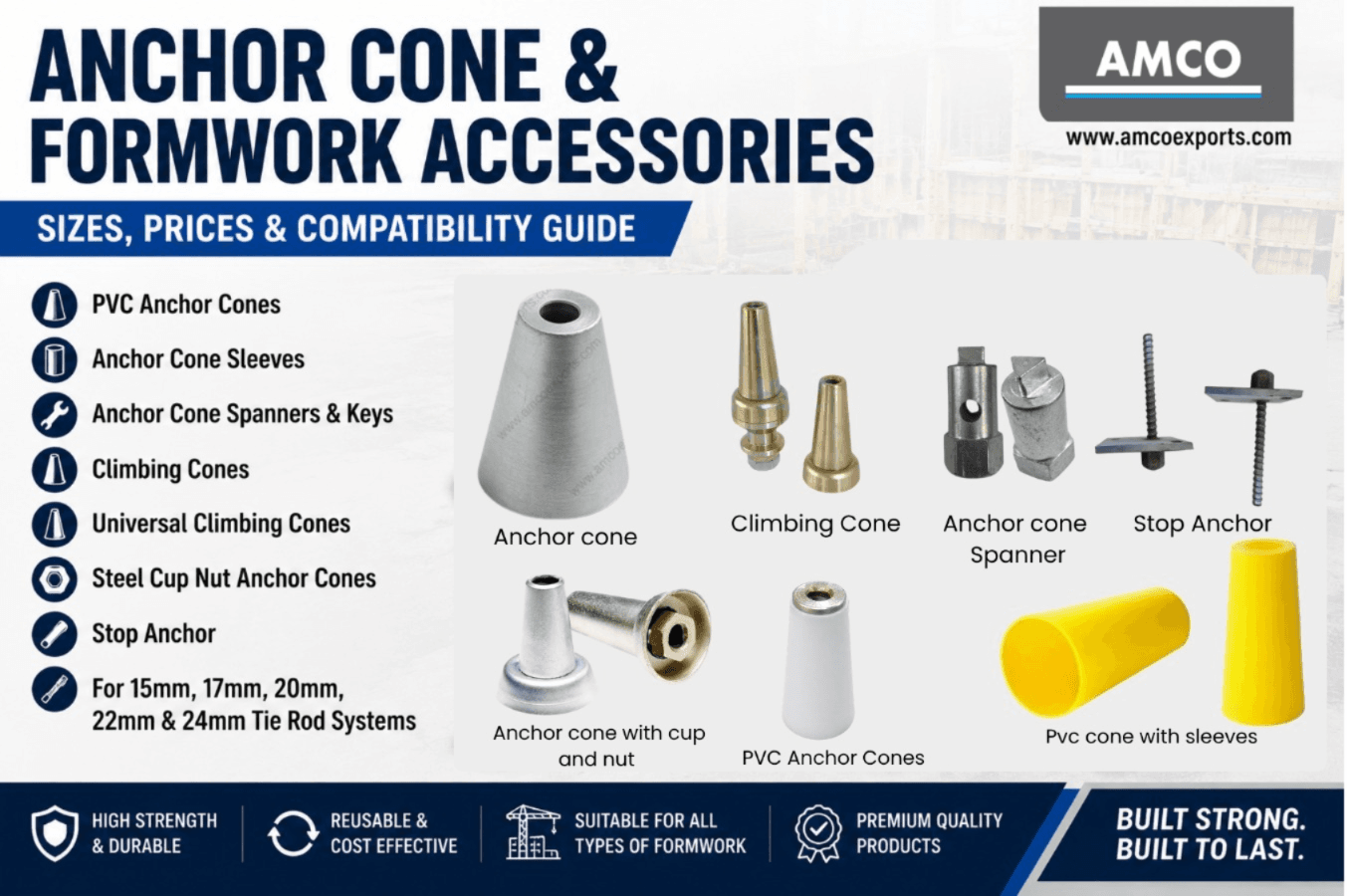
Modern infrastructure projects such as bridges, tunnels, retaining walls, metro stations, dams and high-rise buildings depend on reliable formwork systems. Accessories such as PVC Anchor Cones, Anchor Cone Sleeves, Anchor Cone Spanners, Stop Anchors and Climbing Cones help contractors achieve dimensional accuracy and faster stripping cycles.
Why Are Anchor Cones Important in Formwork Systems?
Concrete formwork systems experience high loads during pouring and curing. Properly selected anchor cone systems help maintain wall alignment, protect tie rod openings and simplify dismantling after concrete hardening.
- Maintains accurate wall thickness
- Creates clean concrete recesses
- Improves stripping efficiency
- Reduces concrete damage during dismantling
- Supports repetitive construction cycles
- Helps lower overall project costs
Common Anchor Cone Sizes and Compatibility
The correct anchor cone depends on tie rod diameter, formwork configuration and project requirements. Common systems are available for:
- 15mm Tie Rod Systems
- 17mm Tie Rod Systems
- 20mm Tie Rod Systems
- 22mm Tie Rod Systems
- 24mm Tie Rod Systems
Contractors and procurement teams should verify tie rod compatibility before installation to ensure safe load transfer and smooth formwork dismantling.
Essential Formwork Accessories Used with Anchor Cones
Modern concrete construction often requires a complete accessory package rather than a single component.
PVC Anchor Cones are widely used in standard tie rod systems because they are lightweight, economical and reusable.
PVC Anchor Cone Sleeves protect tie rod openings and help create clean concrete recesses that require minimal finishing work.
Anchor Cone Spanners make installation and removal easier and reduce labour time during stripping operations.
Stop Anchors provide fixed anchoring points and improve formwork stability during concrete pouring.
Climbing Cones and Universal Climbing Cones are commonly used in high-rise construction and heavy infrastructure projects where load-bearing requirements are significantly higher.
Applications Across Infrastructure Projects
Anchor cone systems are widely used across numerous construction segments:
- Bridge Construction
- Metro Rail Projects
- Tunnels and Underground Structures
- Dams and Hydropower Projects
- Retaining Walls
- Industrial Structures
- Water Treatment Plants
- Commercial Buildings
- High-Rise Towers
- Airport Infrastructure Projects
How Procurement Managers Evaluate Anchor Cone Systems
Procurement managers and project engineers typically evaluate anchor cone systems based on compatibility, reusability, lifecycle cost and supplier reliability rather than price alone.
Choosing compatible accessories helps reduce project delays, minimise material wastage and improve productivity throughout repetitive concrete construction cycles.
Learn More
For detailed information on anchor cone sizes, compatibility, applications and formwork accessory selection, read the complete guide:
👉 Anchor Cone Guide: Sizes, Prices & Compatibility for Formwork Systems
AMCO Exports manufactures and supplies a complete range of Anchor Cones, PVC Anchor Cones, Anchor Cone Sleeves, Stop Anchors, Climbing Cones and other formwork accessories for EPC contractors, infrastructure companies and construction projects across India and international markets.


Comments
Post a Comment