Top Scaffold Safety Tips During Monsoon: 10 Ways to Reduce Site Accident
Top Scaffold Safety Tips During Monsoon are essential for every construction site operating during India's rainy season. Wet platforms, poor visibility, and strong winds can quickly turn routine tasks into serious safety hazards if proper precautions are not taken.
One of the most effective ways to reduce slip-related incidents is by using anti-slip working platforms designed for wet environments. Modern infrastructure projects increasingly rely on Anti-Skid Scaffold Planks to improve worker safety, enhance water drainage, and maintain productivity during monsoon conditions.
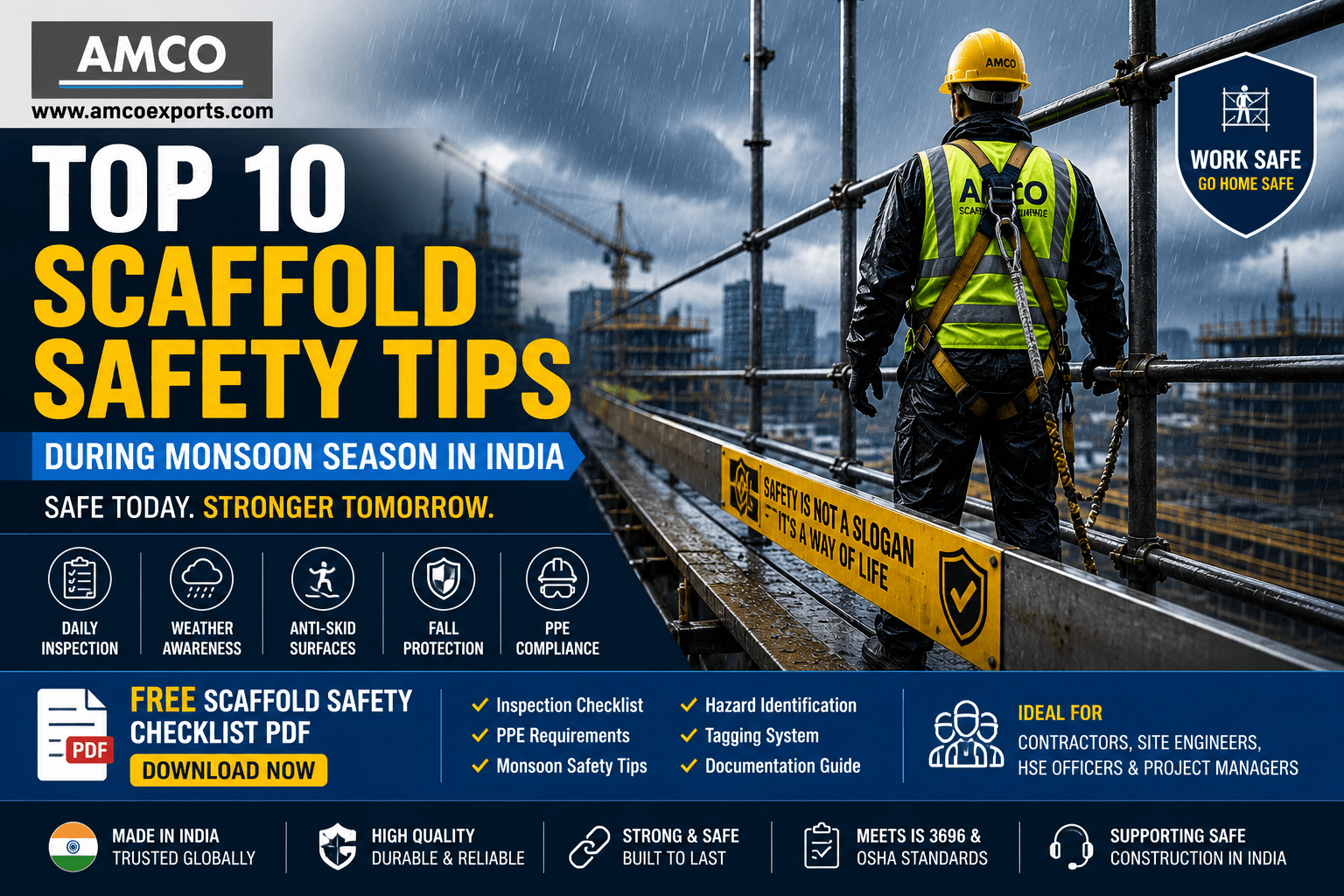
Every monsoon, construction sites across India face the same challenge. Projects can't stop, but worker safety becomes more difficult to manage. The good news is that most scaffold-related accidents can be prevented through proper planning, regular inspections, and the right working platforms.
What Are the Top Scaffold Safety Tips During Monsoon?
The most effective scaffold safety measures during monsoon are conducting daily scaffold inspections and using anti-slip working platforms. If you implement only two changes this season, inspect every scaffold after rainfall and eliminate slippery walking surfaces immediately.
Top Scaffold Safety Tips During Monsoon: 10 Solutions Compared
- Use Anti-Skid Scaffold Planks
Anti-skid steel planks provide superior grip and water drainage, making them ideal for monsoon construction sites. They are increasingly used in metro, airport, and industrial projects.
Learn more about Anti-Skid Scaffold Planks → - Inspect Scaffolding Daily
Inspect standards, ledgers, couplers, guardrails, and working platforms before every shift. Heavy rainfall can affect scaffold stability and worker safety. - Stop Work During Severe Weather
Suspend scaffold work during lightning, heavy rainfall, and strong winds. No project deadline is worth risking worker safety. - Ensure Proper Water Drainage
Standing water increases the likelihood of slips and falls. Ensure working platforms have adequate drainage and remain free from water accumulation. - Wear Proper PPE
Workers should wear non-slip safety shoes, helmets, safety harnesses, and reflective clothing during monsoon operations. - Inspect Guardrails and Toe Boards
Guardrails and toe boards prevent falls and protect workers below from falling tools and materials. - Secure Scaffold Structures
Check all braces, anchors, and tie-ins regularly. High winds can compromise scaffold integrity if components are not properly secured. - Maintain Good Housekeeping
Keep ladders, stairways, and access areas free from mud, debris, and loose materials. - Monitor Electrical Hazards
Rain and exposed electrical installations create additional risks. Maintain safe distances from power lines and inspect temporary wiring frequently. - Implement a Scaffold Tagging System
Use Green, Yellow, and Red tags to communicate scaffold status and ensure workers know which structures are safe to use.
How to Choose the Right Scaffold Safety Solution During Monsoon
| Project Type | Recommended Solution |
|---|---|
| Metro Rail Projects | Anti-Skid Steel Planks |
| Airport Construction | Perforated Steel Platforms |
| Industrial Maintenance | Steel Scaffolding Planks |
| Electrical Work | FRP Platforms |
| Bridge Construction | Ringlock Scaffold Decks |
| Coastal Projects | Galvanized Scaffold Boards |
Scaffolding in Rain: Common Safety Mistakes to Avoid
- Skipping scaffold inspections after rainfall.
- Using wet wooden boards without checking their condition.
- Ignoring standing water on platforms.
- Allowing workers to wear unsuitable footwear.
- Failing to install guardrails and toe boards.
- Continuing work during thunderstorms.
- Poor housekeeping around access points.
- Ignoring scaffold tagging procedures.
Most scaffold accidents during monsoon are preventable. Proper inspections, PPE, and anti-slip working platforms can dramatically improve site safety.
Why Anti-Skid Planks Support Scaffold Safety During Monsoon
Anti-Skid Scaffold Planks are designed for environments where water, mud, and constant foot traffic are unavoidable. Their perforated design provides better grip while allowing water to drain efficiently.
These planks are commonly used in:
- High-Rise Construction
- Metro Rail Projects
- Airport Infrastructure
- Oil & Gas Facilities
- Industrial Maintenance
- Bridge Construction
Product Page: Anti-Skid Scaffold Plank
Top Scaffold Safety Tips During Monsoon: Final Thoughts
Monsoon doesn't create unsafe construction sites. It exposes weaknesses that already exist. Contractors who prioritize inspections, training, and safer working platforms consistently experience fewer incidents and less downtime.
Construction safety starts with preparation. A few minutes spent inspecting scaffolding today can prevent a major incident tomorrow.
Helpful Resources
- Anti-Skid Scaffold Plank Guide
- Steel Scaffolding Plank
- OSHA Scaffolding Safety Standards
- Ministry of Labour & Employment
Frequently Asked Questions
1. What are the best scaffold safety tips during monsoon?
Daily scaffold inspections, anti-slip working platforms, proper PPE, and weather monitoring are among the most effective safety measures.
2. Is it safe to use scaffolding in rain?
Yes, provided scaffolds are inspected regularly and work is suspended during severe weather conditions.
3. What should a scaffold safety checklist include?
A scaffold safety checklist should cover structural inspections, PPE, weather assessments, electrical hazards, and scaffold tagging.
4. Are anti-skid scaffold planks worth it?
Yes. They improve worker safety, enhance drainage, and reduce slip hazards during monsoon conditions.
5. How often should scaffolds be inspected?
Scaffolds should be inspected daily and immediately after heavy rainfall or strong winds.
6. What is the difference between steel and wooden scaffold boards?
Steel scaffold boards offer greater durability and weather resistance, while wooden boards are more susceptible to moisture and wear.


Comments
Post a Comment